When your hearing feels obstructed, it can interfere with your daily routine and leave you feeling withdrawn from your surroundings. It is typical to assume that muffled sound signifies long-term hearing deficiency, but the problem is often just a resolvable earwax blockage.
Distinguishing between a wax impaction and true hearing loss is vital for identifying if you need a simple cleaning or a formal audiological exam. If you’re experiencing muffled hearing, don’t panic. A clinical assessment will deliver the definitive answer, but the following guide outlines the main variations between blockage-based issues and lasting loss.
How to Recognize a Wax Blockage
Cerumen (cerumen) is a natural, defensive substance that helps capture dirt and debris and keeps the ear canal healthy. Medical issues only develop when the wax neglects to migrate out of the ear, leading to a significant accumulation or impaction.
Signs of a clog often include:
- Progressive or sudden muffled hearing
- A feeling of ear pressure or a “plugged” feeling
- Canal irritation or mild pain
- Internal tinnitus within the affected ear
- Moments of clearer hearing after a yawn or chewing
A hallmark of blockage-based sound changes is asymmetry, typically affecting one side over the other. Luckily, once surplus wax is professionally extracted, hearing often returns to normal right away.
Recognizing Permanent Impairment Symptoms
Unlike a brief blockage, nerve-based hearing deficit usually progresses slowly over years and is not resolved by clearing the canal.
Common symptoms of clinical auditory loss include:
- Trouble comprehending speech, particularly in noisy settings
- Constantly asking people to repeat themselves
- Adjusting electronic device levels to a point that others find uncomfortable
- Trouble hearing treble sounds like nature or soft voices
- Bilateral hearing changes that impact both ears at once
Crucially, auditory loss is a clarity issue that rarely involves the perception of manual fullness found with wax.
At-a-Glance: Cerumen vs. Auditory Decline
While evaluating cerumen impaction vs. hearing loss, a few clues can help guide you in the right path:
- Progression: Obstructions can feel sudden, while auditory decline is virtually always gradual
- Reversibility: Cerumen hearing changes are usually brief; auditory impairment is often permanent
- Clues: Pressure suggests a blockage; struggling with word precision suggests impairment
- Asymmetry: Wax often impacts a single ear; hearing loss commonly affects each
Why You Shouldn’t Treat Yourself
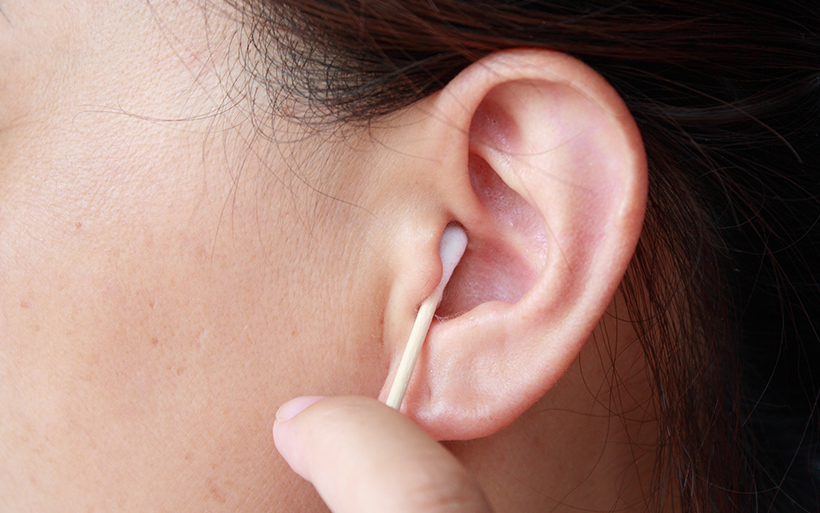
Many people make the error of attempting to clear a suspected blockage manually using probes or home tools. In truth, physical poking often compacts the wax deeper against the eardrum, making the impaction more severe.
Health specialists caution that putting anything less substantial than your elbow in your ear can lead to tympanic damage and major impaction.
On the other hand, presuming a concern is just wax when it is truly auditory impairment can hinder you from getting the assistance you need to stay connected.
How a Clinical Exam Assists
A brief ear exam can quickly verify whether cerumen is blocking the ear.
When cerumen is the cause, in-office irrigation or manual clearance provides instant resolution.
When the canal is clear but sound is still muffled, a diagnostic assessment is necessary to evaluate your auditory health.
The NIDCD recommends prompt evaluation whenever changes in auditory function conflict with your everyday life.
Final Points on Cerumen and Hearing Wellness
Dampened auditory quality is not a definitive sign of long-term loss.
It is often the case that a basic, resolvable blockage is the root of the issue.
Your hearing care team can assist you to get to the root of muffled auditory symptoms so you can move forward with confidence and peace of mind.
Please note that self-diagnosis is hardly a replacement for a professional exam when it comes to your auditory health.
Finding clarity promptly can avert pointless worry and guarantee you receive the appropriate treatment at the right moment.
If your auditory sense feels off, don’t guess. A brief check can make all the difference, so contact our practice of specialists right now.
