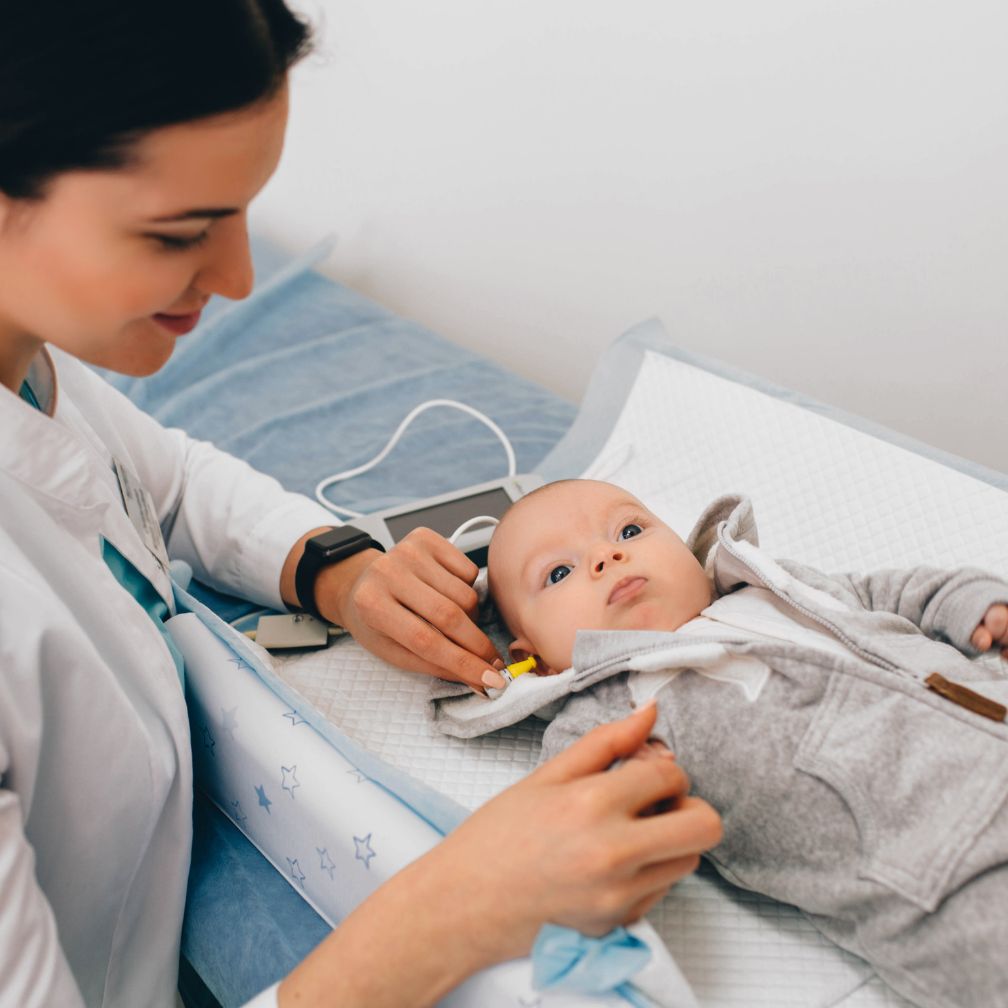
For parents holding a newborn, receiving news of an infant’s hearing impairment often feels distressing and daunting. But the good news is: with early detection and intervention, babies with hearing loss are able to grow and succeed. In fact, such infants can build early speech, interactive expression, and deep bonds across their environment, unlocking a highly enriched future!
Combining traditional hearing devices with specialized cochlear technology delivers two outstanding solutions for helping infants who exhibit hearing loss. In the passage below, we evaluate their specific functions and explain how to determine the best choice for your infant.
Demystifying Hearing Deficits in Newborns
Auditory loss among newborns frequently arises from various underlying sources, including:
- Random genetic variations (even among ancestral lineages missing hearing loss history)
- Congenital pathogen exposures such as cytomegalovirus (CMV) and rubella
- Acute complications during birth, incorporating lack of oxygen or prematurity
- Particular clinical medications prescribed during neonatal intensive care
What stage carries the most weight? Rapid clinical confirmation. This necessity explains why babies across the United States undergo auditory checks before departing the nursery. Clinical pediatric audiology doctors consistently follow the established “1-3-6” operational timeline:
- Officially screened within 1 month
- Officially diagnosed within 3 months of age
- Medical intervention (incorporating corrective units or speech habilitation) launched inside 180 days post-birth
Reaching these clinical benchmarks offers babies a strong foundation for healthy speech, language, and cognitive growth. Should you seek further counsel on these clinical screenings, your personal pediatrician stands eager to help!
Infant Hearing Aids: Overview & Benefits
For infants diagnosed with mild to severe auditory loss, digital hearing aids generally constitute the initial therapeutic step. These compact, body-worn units boost incoming sound waves, assisting babies in catching spoken words and environmental sounds more distinctly.
Customized infant hearing instruments operate as:
- Fully safe for clinical use in babies only a few weeks after birth
- Constructed using soft, comfortable ear inserts that adapt during early physical development
- Outfitted with child-proof battery covers and child-focused protective mechanisms
- Individually configured by a pediatric hearing professional to target your infant’s specific hearing levels
During physical development, hearing aids necessitate regular clinical recalibrations to ensure snug placement and precise amplification.
Advanced Surgical Solutions: Infant Cochlear Implants
When an infant presents with severe to profound sensorineural hearing deficits and fails to receive sufficient benefit from standard hearing aids, a cochlear implant may be recommended. Unlike conventional amplification tools, advanced cochlear implants:
- Need a targeted surgical procedure for final insertion executed by a pediatric specialist
- Safely route around damaged structures of the inner ear anatomy
- Translate environmental sound into electrical signals that stimulate hearing nerve pathways directly
Dedicated pediatric cochlear devices serve as:
- Granted regulatory approval by the FDA for children starting at 9 to 12 months old
- Highly effective when supported by early speech therapy and strong household backing
- Cleared only after complete multi-disciplinary testing by a certified audiologist and otolaryngologist
This diagnostic phase features radiological imaging, comprehensive audiometric testing, and setting realistic expectations for future communicative success.
Comparing Hearing Aids and Cochlear Implants: Key Differences
- Mild to severe hearing loss relies on Hearing Aids; Severe to profound levels of loss demand Cochlear Implants
- Non-Invasive external placement: Hearing Aids; Invasive surgical installation: Cochlear Implants
- Standard sound amplification logic: Hearing Aids; Converts Sound Electrical Signals: Cochlear Implants
- Treatment starts in newborn infancy: Hearing Aids; Implantation starts at 9-12 months: Cochlear Implants
Final Takeaways: Navigating Infant Hearing Solutions
If your baby has been diagnosed with hearing loss, you have access to outstanding technological paths and compassionate guidance. Under the care of specialized pediatric hearing doctors, most children construct speech and language proficiency that rivals their normal-hearing peers.
Irrespective of whether your child receives fitting for hearing aids or surgery for cochlear devices, taking immediate action delivers permanent lifelong benefits.
Have you got specific questions concerning your newborn’s hearing abilities? Contact our staff today to obtain an exhaustive evaluation and custom-designed care plan.
