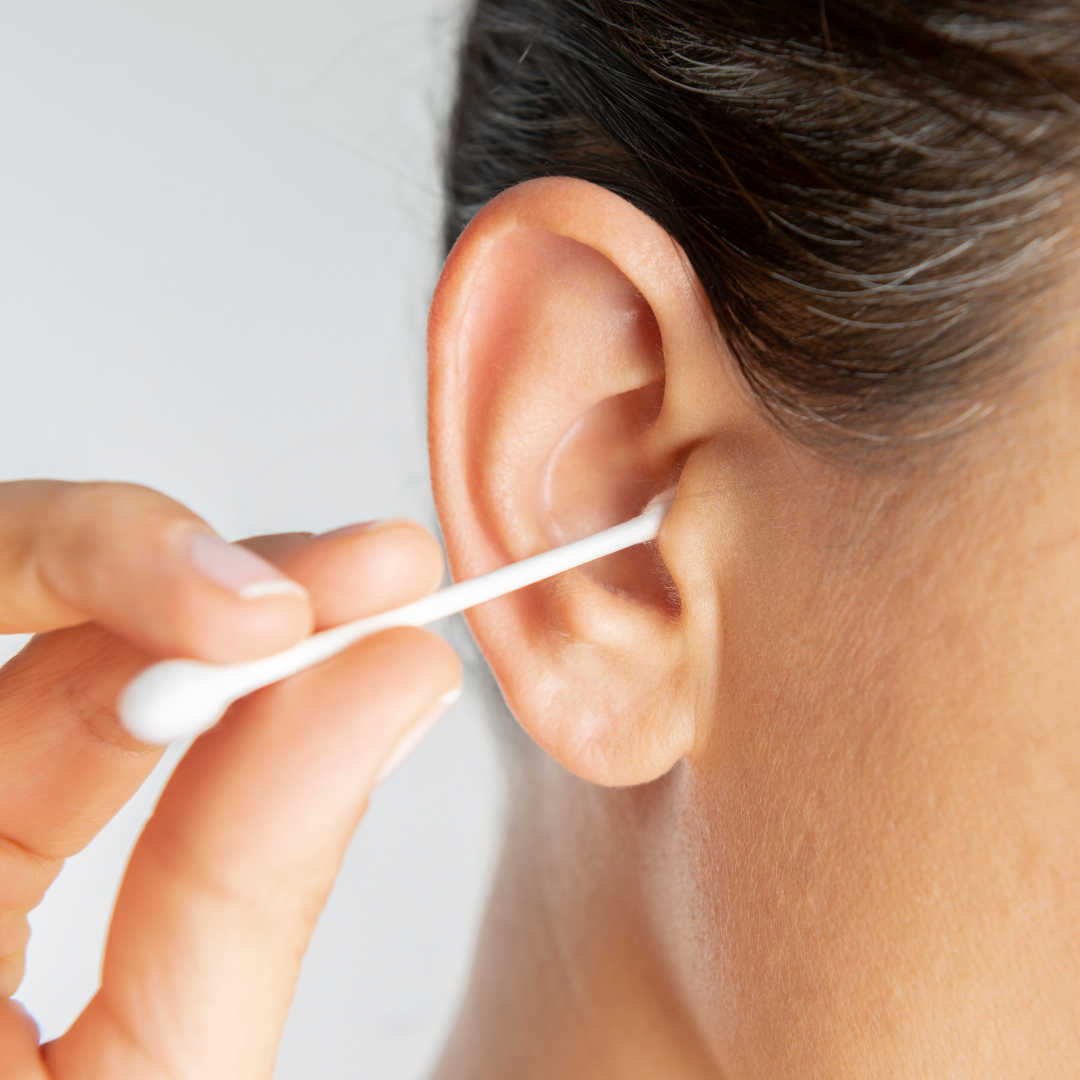
Although cotton swabs feel like accessible ear-care tools, introducing them into the canal hinders self-cleaning mechanisms and may harm your hearing. We assess whether your earwax demands professional intervention and provide customized care strategies that match your clinical profile. Most ears do not mandate routine physical scrubbing; yet, if accumulation occurs, we guide patients through safe cerumen management.
The Hidden Dangers of Cleaning Ears with Q-Tips
Natural earwax, medically termed cerumen, does not represent bodily dirt. It functions to intercept foreign debris, suppress bacterial activity, lubricate internal tissues, and guard vulnerable ear canal skin. Standard jaw mechanics and lateral skin shedding propel oxidized wax toward the outer meatus, allowing it to dry and wash away during daily washing.
Placing a cotton applicator inside the canal completely interrupts this automated self-clearing cycle. While you may see a tiny amount of wax on the swab, the device generally shoves the rest deeper toward the eardrum. Repeated use can pack wax into a firm blockage and create the plugged sensation that encourages even more cleaning.
You may gently utilize cotton swabs across the external auricle, but you should avoid inserting them into the internal canal.
Clinical Complications Associated with Q-Tip Insertion
Canal skin is thin, vascular, and highly vulnerable to mechanical abrasions. Small abrasions can cause pain or bleeding and create an opening for bacteria, increasing the risk of an outer-ear infection. There is also a risk that the cotton tip will detach and become stuck deep inside the auditory canal.
Swab-related clinical injuries include:
- Severe earwax impaction near the tympanic membrane
- Epithelial lacerations, inflammation, erythema, or bleeding
- Pathogenic infection involving the ear canal
- Foreign matter or cotton material lodged in the ear
- Structural tears or perforations across the eardrum
- Damage to the tiny acoustic middle-ear bones
- Sudden alterations in auditory acuity or permanent hearing changes
- Tinnitus, dizziness, or severe ear pain
Even though major trauma is uncommon, someone bumping your arm, a sudden hand slip, or deep over-insertion can cause severe damage.
Clinical Guidelines on Earwax Removal Frequency
For the average individual, scheduled cerumen removal is completely unnecessary. Physiologically stable ears continuously migrate wax outward, while standard showering takes care of the visible ear. Scrubbing too frequently dehydrates the auditory passage, causes persistent irritation, and raises risks for secondary infections or blockages.
Extraction is medically indicated when cerumen fully occludes the lumen, blocks visual examination of the eardrum, compromises hearing aid function, or induces pain.
Clinical Guidance for Safe At-Home Cerumen Care
When cerumen creates no clinical symptoms, leaving the canal alone remains the most prudent approach. Wipe only the outer ear with a soft, damp cloth, and let the canal clean itself.
Should cerumen require breakdown, our team may recommend commercial cerumen-removal drops or formulas featuring saline, mineral oil, glycerin, or carbamide peroxide. Administer strictly the dosage indicated on the packaging and adhere precisely to the recommended treatment duration. Immediately halt applications if the medication triggers pain, profound dizziness, skin irritation, or deteriorating symptoms.
At-home ear irrigation is not universally safe and requires clinical clearance and technique demonstration from an audiology professional beforehand. You must never employ high-pressure dental water jets for ear clearing. Steer clear of dangerous tools such as ear candles, metal curettes, lighted camera tools, bobby pins, and home vacuum devices. These questionable products can burn sensitive tissues, lacerate the canal, rupture the eardrum, or compact wax deeper.
Clinical Indicators for Professional Earwax Removal
Schedule an appointment when an ear remains plugged after an appropriate softening treatment, wax appears deeply impacted, or home care repeatedly fails. Professional removal is also preferable when a person cannot safely hold still, has a narrow ear canal, uses hearing aids, or has medical or surgical factors that make drops or irrigation risky.
You should seek professional assessment for:
- Unresolved ear discomfort, persistent canal itching, or touch sensitivity
- Blood, pus, clear fluid, or unpleasant-smelling drainage
- Pyrexia or localized tissue swelling surrounding the ear canal
- New acoustic tinnitus sounds or unstable balance sensations
- Rapid-onset hearing impairment or ongoing hearing deficits post-cleaning
- A suspected tympanic membrane rupture or retained swab material
- Recurrent wax blockages that compromise hearing aid performance
Regard sudden unilateral hearing loss as a time-sensitive medical emergency instead of presuming it is earwax. Timely clinical evaluation distinguishes benign wax blockages from urgent inner ear pathologies requiring rapid steroid therapy.
Professional Techniques for Cerumen Removal
First, we inspect the auditory canal under otoscopic or microscopic visualization to confirm wax occlusion and rule out infections, tissue trauma, or eardrum perforations. The ideal extraction strategy is dictated by the consistency of the wax, ear canal dimensions, clinical background, past ear procedures, and patient physical stability.
Expert removal procedures include:
- Topical cerumenolytic drops applied prior to or during the clinical visit
- Regulated mechanical irrigation with body-temperature saline for sealed eardrums
- Low-pressure manual suction under direct high-magnification lighting
- Manual removal with a loop, curette, or small forceps
Direct visual control ensures the provider maneuvers safely around thin canal skin and stops if any tenderness develops. Combining multiple extraction techniques is sometimes required for stubborn, dehydrated, or densely consolidated cerumen. After removal, the ear can be reexamined to confirm that the canal and eardrum are healthy. When symptoms like fullness, tinnitus, vertigo, or hearing loss continue, supplementary audiological assessments can uncover alternate conditions.
Arrange Safe In-Office Earwax Removal
If your ears feel blocked or your hearing has changed, schedule an evaluation with us instead of reaching for a Q-Tip. Your appointment can include a review of symptoms, previous ear procedures, hearing aid use, home treatments, and factors that may increase wax buildup. Contact us to request an earwax-removal appointment.
