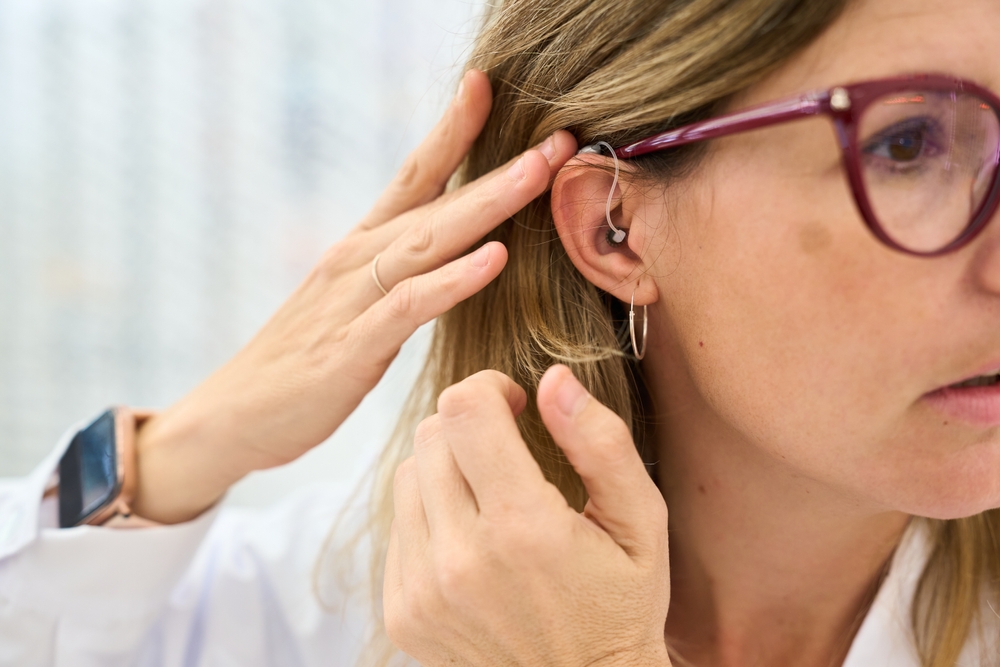
A primary reason individuals put off addressing auditory deficits is the assumption that assistive devices will be unsightly or awkward to wear. Historically, old-fashioned hearing hardware was bulky, obvious to onlookers, and closely linked with the stigmas of aging. Regrettably, some people even experienced social alienation because acquaintances falsely assumed that wearing a visible aid signaled a complete inability to comprehend spoken dialogue.
Consequently, this outdated, negative stereotype persists, preventing numerous individuals from seeking professional care. In reality, the sophisticated hearing instruments of the present era deliver a look and feel that shatters these old assumptions. Thanks to rapid technological evolution, modern devices are remarkably downsized, highly ergonomic, and exceptionally covert.
Should your reluctance stem entirely from memories of obsolete, bulky hardware, you owe it to yourself to discover current medical advancements.
The Outdated Devices of Your Imagination Have Been Replaced
When asked to visualize a hearing instrument, the average person still envisions an awkward, highly conspicuous piece of hardware visible from yards away. Should that be your current expectation, you are inadvertently recalling the clunky designs common to the 1980s and 1990s.
Over the last few generations, this medical technology category has experienced a total structural evolution. Continuous refinements in ergonomic styling, nanometer-scale circuitry, and digital audio engineering have radically overhauled the modern cosmetic profile. Today’s instruments are profoundly smaller, remarkably streamlined, and strategically engineered to blend flawlessly into your natural anatomy or vanish altogether.
Many of today’s devices sit fully inside the ear canal, making them virtually invisible during everyday conversation. Different configurations sit comfortably behind the ear but feature such a low profile and featherweight build that observers naturally miss them.
Navigating Modern Hearing Technology: The Three Core Styles Evaluated
For those investigating what these advanced acoustic tools look like in real life, consider this straightforward guide:
The Invisible-in-Canal (IIC) Form Factor
For total subtlety, these instruments have no medical equal. Engineered to rest deep inside the ear canal, IIC systems are individually molded to match the precise contours of your ear. During typical face-to-face communication, these custom models remain completely obscured from view. They represent an ideal intervention path for mild-to-moderate hearing impairments when user stealth is the top priority.
Modern Standards: Receiver-in-Canal (RIC) / Receiver-in-the-Ear (RITE)
This particular layout has become the benchmark standard for contemporary hearing health restoration. A microscopic electronic hub is positioned behind the outer ear, anchored by an ultra-thin, transparent lead to a high-fidelity speaker seated inside the canal. At a glance, they often resemble wireless earbuds. The vast majority of peers will fail to perceive the apparatus unless conducting a highly deliberate close-up inspection.
Traditional Behind-the-Ear (BTE) Reimagined
This style positions the main component body post-auricularly, offering a slightly larger footprint that remains beautifully sculpted and sleek. Clinically indicated for profound or severe hearing deficits, they deliver immense acoustic power without the outdated, conspicuous mass of the past.
Ultimately, contemporary hearing aids are built to empower your daily routine rather than broadcast a medical condition to the world.
Advanced Features: Beyond Aesthetics to Smart Technology Integration
The changes in modern hearing aids aren’t just cosmetic. Today, they function more like smart devices than traditional medical equipment. Many connect directly to your phone via Bluetooth, letting you stream calls, music, or even TV audio straight to your ears with no headphones needed.
Through proprietary mobile apps, patients can effortlessly adjust acoustic thresholds or modify directional settings completely hands-free. Say you’re walking into a noisy restaurant: You can fine-tune your hearing to match the environment in seconds. Rechargeable batteries have also replaced the tiny ones people used to struggle with. The process is as simple as placing the units into their charging dock each night, identical to charging your cell phone.
Empowerment Over Hesitation: Redefining Hearing Health Care
Even knowing all of this, it’s easy to hesitate. Acknowledging a sensory deficit and investigating rehabilitation options often forces a difficult confrontation with our own vulnerability and bodily changes. This realization can occasionally induce feelings of helplessness, leaving patients feeling detached from their own physical autonomy.
Consider a healthier perspective: wearing a contemporary hearing system does not mean your body has failed you. They are merely an intelligent adaptation to a universal milestone of aging that impacts us all eventually. Adopting this tech is definitive proof that you are actively taking charge of your health to empower and protect your daily cognitive function.
Consider the profound joy of wearing a tiny, unnoticeable device that lets you confidently command group discussions, master noisy environments, and immerse yourself in what matters most. Talk about empowering!
Experience Contemporary Hearing Technology Firsthand
To dismantle old assumptions, the best strategy is to witness these design breakthroughs with your own eyes. Our clinical team cordially invites you to visit our facility, interview our staff, and evaluate different form factors in a stress-free, zero-obligation environment. Treat this as a risk-free exploratory step to comprehend the incredible aesthetic shift that has occurred in our field.
The overwhelming majority of our patients leave their consultation thoroughly amazed by the compact scale, luxurious comfort, and acoustic clarity of current technology! Reach out to our administrative team or visit our website right now to book your personal demonstration.
